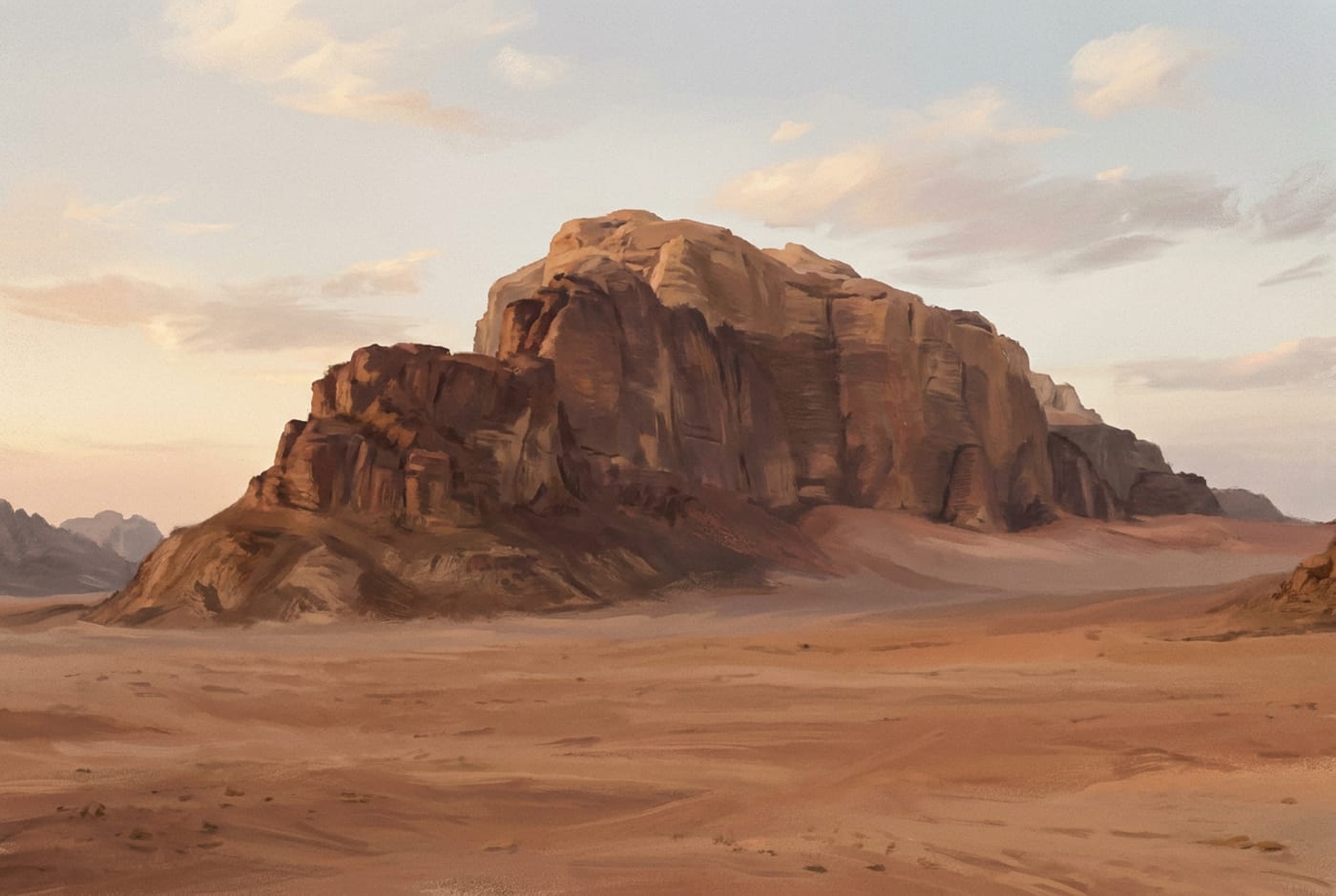
Quraysh return to fight the Muslims at Uhud. An early advantage is lost when a group of archers leaves its post, and the Muslims suffer painful losses, a hard lesson after Badr.
A year after their defeat at Badr, the Quraysh of Mecca came back to fight the Muslims. They marched toward Medina with a large force, hoping to settle the score and to break the young community. The two sides met near Mount Uhud, a short way outside the city. After talking it over, the Muslims went out to meet them on open ground at the foot of the mountain, with the high slope guarding their backs.
Before the fighting began, the Prophet ﷺلى الله عليه وسلم placed a group of archers on a small hill to guard the side and rear of the Muslim army. He gave them a clear instruction: hold this position whatever happens, whether the battle seems won or lost, until he sent for them. At first the plan worked well. The Muslims pushed the enemy back and the early signs pointed to another victory, much like the day of Badr.
Then the lesson came. Seeing the enemy in retreat and thinking the danger was over, most of the archers left their post to gather what had been left on the field. The gap they opened was exactly the weakness the Quraysh cavalry needed. Riders swept around the hill and struck the Muslims from behind. In the confusion the tide turned hard, and many Muslims were killed. The Prophet ﷺلى الله عليه وسلم himself was wounded in the fighting.
Uhud was a painful day, and the Qur'an speaks about it openly in Surah Aal Imran, treating the setback as something to learn from rather than hide. It reminded the believers that victory comes from God, that obedience matters even when a moment looks easy, and that hardship can test and strengthen faith. After Badr had lifted their spirits, Uhud taught the community patience, discipline, and trust through difficulty.
Sources
Qur'an
Classical history
Seed content, under scholarly review.